A gondolier outside the Bacino Orseolo quoted me 100 euros for a six-minute loop past the Bridge of Sighs, then dropped to 80 the second I turned to walk away. That was not a special discount. That was the official daytime rate, and he knew it, and he was hoping I did not. Most people who ride a gondola in Venice pay whatever number gets said to them first, which is a shame, because the price is fixed by law and printed on a board at every stazio — you just have to know where to look.
The rate nobody tells you about
Gondola fares are set by the Ente Gondolieri, the gondoliers' own governing body, and reviewed most years rather than left to whoever is holding the oar. As of recent seasons the daytime rate (roughly 9am to 7pm) runs to about €80 for up to 30 minutes, for the boat, not per person — a gondola takes up to five or six passengers, so split between a group it stops being outrageous. After dark, from 7pm to 8am, the same 30 minutes costs around €100. Go over the half hour and it is billed in 20-minute blocks, at roughly €40 (day) or €50 (night) each. A singer and accordionist for the boat is a separate booking, usually somewhere between €120 and €190 on top, and worth confirming in writing before you step in if that is what you are paying for.
None of this is secret. It is meant to be posted at every official stand, but the board is not always easy to find behind the queue of people already negotiating, and quoting first, high, and confidently is standard practice at the busiest stazi near the Grand Canal. If a price comes back higher than that before any haggling starts, it usually means extra time has quietly been added to the ride, not that the rules have changed.
Where to actually get one
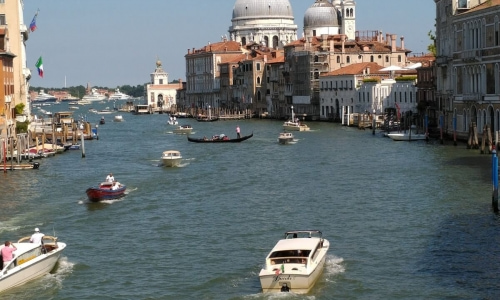
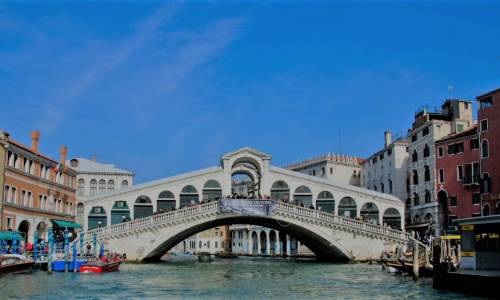
There are around a dozen stazi scattered through the city, and the tariff is the same at all of them, so the choice is really about the route rather than the price. Bacino Orseolo, just behind Piazza San Marco, is the busiest and least interesting — you will spend half your ride queuing to get out of the mooring. The stand by the Rialto Bridge gets you onto the Grand Canal itself, which is the view most people actually want, but it is also the most photographed stretch of water in Europe and you will share it with vaporetti, delivery boats and forty other gondolas doing the same loop. For something quieter, the smaller stazi in Dorsoduro or near Santa Maria del Giglio route you through the back canals first, past washing lines and half-collapsed garden walls, before joining the Grand Canal for the last stretch — a better ride, in my opinion, for anyone who has already seen San Marco from the water on a vaporetto.
The two-euro version
Here is the part most visitors never find out about. A handful of crossing points still run a traghetto — a stripped-down gondola with two standing oarsmen, used purely to ferry people across the Grand Canal where there is no nearby bridge. No tour, no chat, no singer, just a couple of minutes standing up between one bank and the other, for around €2. Locals use them to avoid a ten-minute walk to the nearest bridge; almost no tourist bothers, mostly because nobody tells them it exists. Active crossings come and go a little by season, but Santa Sofia (near the Rialto market), San Toma, and San Barnaba have all run reliably in recent years. It will not give you thirty photogenic minutes past palazzo facades, but it is the same boat, built in the same yards, and it is the version actual Venetians still pay for.
Speaking of where the boats come from: the Squero di San Trovaso, a working boatyard on a quiet canal in Dorsoduro, is one of the last places gondolas are still built and repaired by hand, and you can watch the work from the fondamenta opposite for nothing. It sits a few minutes from the vaporetto stop at Zattere, and is worth the detour on a day when you are already wandering Dorsoduro rather than a special trip on its own.
What a Venice water crossing actually costs
| Option | Duration | Typical price |
|---|---|---|
| Traghetto crossing | 1–3 minutes | €2 per person |
| Vaporetto single ticket | Any length within 75 min | €9.50 |
| Gondola, daytime | 30 minutes | €80 per boat |
| Gondola, after 7pm | 30 minutes | €100 per boat |
| Gondola with singer | 30 minutes | €200–270 per boat |
Booking it without getting stung
Agree the price, the duration, and whether music is included before anyone pushes off, and if you can, get it from the stazio's own booth rather than a tout working the crowd near St Mark's, who will often add a commission you never see itemised. Splitting a boat between two couples rather than booking a private ride for two roughly halves the cost per person, and the gondolier will usually suggest this themselves if you ask about sharing — it fills the boat faster for them too. Evenings look better in photographs, but the canals are calmer and less congested with other traffic in the mid-morning slot before the day-trip crowds arrive, which also happens to be the cheaper half of the tariff.
- Confirm price and minutes verbally before boarding — "80 euros, half an hour" said back to the gondolier avoids disputes at the end.
- A private ride starting from the Rialto side gets you the classic Grand Canal view without the Bacino Orseolo queue.
- If budget is the point and not the photograph, take a traghetto instead and spend the saved €78 on a proper dinner.
After the ride, most gondola stands near San Polo and the Rialto put you within a few minutes' walk of a decent cicchetti crawl, which is a far better use of the evening than a second loop on the water. And if the whole thing sounds like too much organising for one photo op, the vaporetto network will take you down the same Grand Canal for the price of one gondola minute.