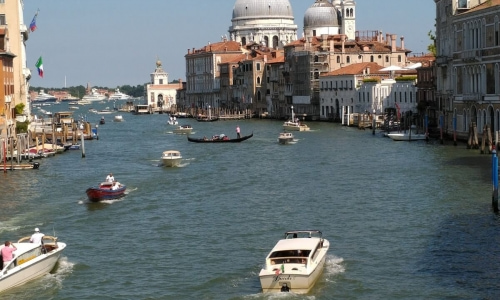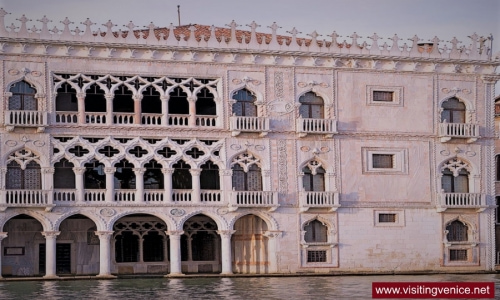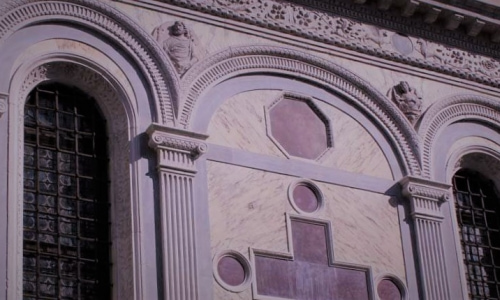

On the first Sunday of September the Grand Canal stops being a thoroughfare and turns into a racetrack. Vaporetti get diverted off the main channel, the water taxis vanish for the afternoon, and several hundred wooden boats line up off the Public Gardens pointing downstream toward a floating judges' stand moored near Ca' Foscari. This is the Regata Storica, and unlike Carnevale, almost nobody in the crowd is wearing a costume – the costumes are all in the boats.
A parade before anyone races
The afternoon opens with the corteo storico, a procession of sixteenth-century-style boats rowed by crews in period dress, re-enacting the 1489 return of Caterina Cornaro, the Venetian noblewoman who had been Queen of Cyprus and came home to formally cede the island to the Republic. The centrepiece is the Bucintoro, a gilded replica of the doge's ceremonial barge, trailed by bissone rowed by eight oarsmen apiece in velvet and brocade. It moves slowly and looks faintly ridiculous next to what comes after, which is rather the point: the corteo is theatre, the races are sport, and most Venetians on the fondamenta know exactly which half of the afternoon they turned up for.
Four races down the same stretch of water
Once the parade clears, the actual regatta runs as four separate races, youngest and lightest crews first, working up to the one everybody has really come to see. Boats and categories have barely changed in a century: two-oar racing gondolas for boys under eighteen, then a women's race in the lighter mascareta, then young men in pairs, and finally the gondolini – slim, single-oar racing gondolas rowed solo by adult men, standing, down the full length of the course.
The running order
| Race | Who rows | Boat |
|---|---|---|
| Pupparini | Boys under 18 | Two-oar racing gondola |
| Mascarete | Women, solo | Light racing gondola |
| Gondolini a due remi | Young men, pairs | Two-oar racing gondola |
| Gondolini | Men, solo | Single-oar racing gondola |
The men's gondolini is the last race and the one with a crowd four or five deep along every fondamenta from the start to the finish line. Crews come from rowing clubs across the lagoon – Burano, Pellestrina, the Lido – and family names recur on the results sheet across decades, the way they do in any small sport where everyone learns from an uncle. Winners are handed coloured pennants at the machina: red for first, white for second, green for third, blue for fourth. Whoever finishes last is traditionally presented with a live pig, a joke that has outlasted the varnish on most of the boats.
Where to actually watch it
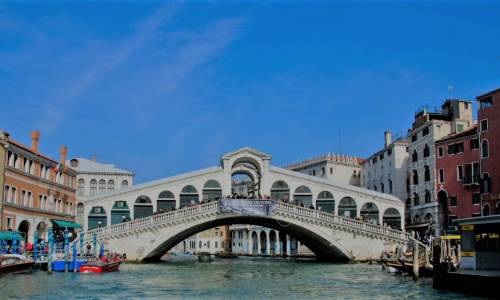
The best free viewing is the Volta di Canal, the bend in the Grand Canal right by Ca' Foscari, where the water narrows and the crews have to fight the current on the turn – it is where races are genuinely won and lost, not just finished. Get there by early afternoon if you want a spot at the railing; by the time the men's gondolini sets off the fondamenta on both banks are solid with people and nobody is giving up their patch. The stretch around the Rialto Bridge gives a good, if more distant, view of the boats passing at speed, and it empties out faster afterwards if you would rather not fight the crowd at Ca' Foscari.
Palazzi and restaurants along the route rent out balcony seats and window tables for the afternoon, usually somewhere between one hundred and three hundred euros depending on how central the view is; these get booked out through August, so it is not a same-week decision. A handful of restaurants in Dorsoduro near Ca' Foscari take regatta-day bookings with the terrace view included in the price of lunch, which is a calmer way to watch than standing in a crowd for three hours, if a good deal more expensive than the fondamenta.
The Comune also puts up a small number of official grandstand seats, tribune, along parts of the course, sold in advance through the city's events office rather than on the day. They are worth checking for if you want a guaranteed seat without the restaurant prices, though the allocation is modest and tends to go early – do not count on finding one by turning up in August. Everyone else stands, and standing for three hours on stone paving is the honest trade-off for watching for free.
What to eat while you wait
Nobody serious about a spot on the Volta di Canal gives it up to go and sit down for lunch, so the food that actually gets eaten on regatta day travels with the crowd. Bacari near the course sell rounds of cicchetti to takeaway well past their usual counter hours, and it is entirely normal to see someone balancing a spritz and a plate of baccalà mantecato on the railing while trying not to lose their view. Bring water if the afternoon is hot; the queue for the nearest bar with a free moment to pour one gets long fast once the corteo has passed and the crowd realises the wait for the main race is longer than they had planned for.
Getting there and away
Vaporetto line 1 gets suspended along the racecourse for the whole afternoon and line 2 is rerouted around it, so do not plan on the boats to get you anywhere near the Grand Canal once the corteo starts, roughly mid-afternoon through early evening. Walking is the only reliable option within the race zone; if you are staying near San Marco or Rialto, budget extra time to loop round on foot rather than waiting for a diverted line that may not come. Once the last pennant is handed out the crowds disperse fast and the vaporetti are usually running close to normal again within the hour.
It is a different afternoon to the Redentore, which is really a picnic with fireworks attached. The Regata Storica is closer to a local derby: people bring binoculars, argue about line calls, and boo boats from rival sestieri with real feeling. Nobody is performing for the visitors lining the banks – they would be racing whether the tourists showed up or not – which is exactly why it is worth showing up for.