
The first time I got caught out was in Campo San Polo, half past ten on a November evening, when the pavement under my boots simply disappeared beneath a sheet of black water. No storm, no rain falling — just the lagoon quietly reclaiming the square. That is acqua alta, and if you are in Venice between October and January, sooner or later you will meet it.
Why the water comes up
Acqua alta is not a flood in the dramatic sense. It is an exceptionally high tide, pushed further by a scirocco wind blowing up the Adriatic and, less often, by low atmospheric pressure. Add centuries of the city slowly sinking and sea levels slowly rising, and Venice floods more readily than it once did. The lagoon tide runs on its own six-hour rhythm regardless of anyone's plans, so the water that covers Piazza San Marco at nine in the morning is usually gone by early afternoon.
The season runs roughly from late September to April, with the sharpest peaks in November and December. Since the MOSE barrier — the row of mobile gates across the three inlets to the lagoon — became operational in 2020, the most severe floods have mostly been kept out, and San Marco has stayed dry through tides that would once have put half a metre of water inside the Basilica. MOSE only closes for genuinely high tides, though. It does nothing for the routine 80–100cm rises that still catch visitors out several times a month in autumn.
Reading the sirens
When a significant tide is expected, the city sounds a siren from towers around Venice, usually a couple of hours ahead of the peak. A single rising tone means moderate water is on the way; additional tones after it signal how high, in rough bands. Locals count them without thinking; visitors mostly just hear a wailing noise drifting over the rooftops and assume something is wrong. Nothing is wrong — it is only the tide. For an actual number, check the Centro Maree Venezia website, which publishes the forecast level in centimetres for the next few days and is far more useful than the siren on its own. Hotel reception staff will usually know the forecast before you ask, since it dictates whether they need to put sandbags across the front door that night.
Do not assume a flood warning ruins the day. Most acqua alta events peak for an hour or two around high tide and drain away well before dinner, so a morning forecast of 100cm rarely affects an evening booking at a restaurant on slightly higher ground.
Getting around on a flood day
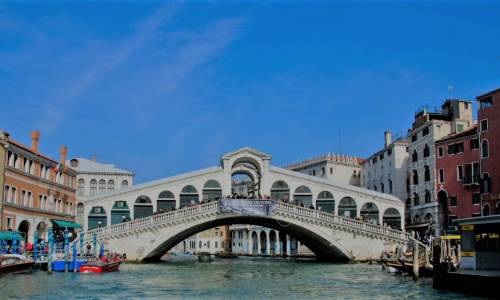
Once the tide passes about 90cm, the city lays out passerelle — raised metal walkways — along the main routes between the station, Rialto and Piazza San Marco, which floods first because it sits on some of the lowest ground in the city. They are narrow, one person wide in places, and fill up fast, so do not expect to keep to a schedule if you need to cross one at rush hour. Vaporetto routes get reshuffled too: the Line 1 stop at San Marco Vallaresso is often the first to close, with boats diverting to San Zaccaria until the water drops.
| Tide level | What it usually means |
| 80–90cm | The lowest corners of Piazza San Marco start to flood |
| 100–110cm | Passerelle go up on the main routes; roughly a tenth of the city is affected |
| 120–130cm | Flooding spreads well beyond San Marco; MOSE is normally raised at this point |
| 140cm+ | Rare since MOSE, but most of the historic centre would be affected |
What to actually wear
Stallholders around San Marco sell clear plastic overshoes for a few euros the moment the sirens start, and they will get you through one unlucky afternoon well enough. Skip the stall directly outside the Basilica, though — the same overshoes cost half as much two streets back. If you already know you are travelling in November, pack proper ankle-high waterproof boots instead. Trainers soak through in seconds, and lagoon water sitting in your socks for the rest of the day is not a sensation you want to repeat. Leave the good shoes at the hotel on any day the forecast looks marginal.
A short checklist if you are booking a November or December trip and want to plan around it rather than be surprised by it:
- Pack ankle-high waterproof boots, not just an umbrella
- Check the Centro Maree Venezia forecast the night before and again at breakfast
- Ask your hotel at check-in whether the ground floor is prone to flooding, especially in Cannaregio and around the station
- Keep valuables and chargers off the floor of your room overnight during a high forecast
Where to go if San Marco is under water
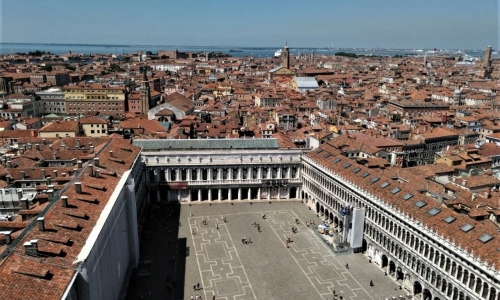
San Marco is the postcard image of acqua alta because it is the lowest sestiere and the one every news camera points at, but plenty of Venice stays perfectly dry on the same afternoon. Dorsoduro and the higher stretches of San Polo sit that little bit above the worst of it, and their bacari keep pouring spritz and serving cicchetti regardless of what the lagoon is doing outside. If your hotel is near San Marco and the siren has gone off, it is often less trouble to walk the other way for lunch than to wait out the tide.
None of this should put anyone off a November or December trip. The crowds thin out, hotel prices drop, and a flooded Piazza San Marco at dawn, empty of tour groups and mirroring the Basilica in still water, is a better photograph than anything you will get in August. Just bring the boots.